What to Do When Your Baby Swallows a Coin or Small Toy

When we think about choking, most of us picture a baby struggling with a piece of food, perhaps a grape, sausage, or bit of toast. But food isn’t the only danger. Every year, thousands of children end up in emergency departments after swallowing or choking on small, everyday objects. Coins, buttons, small toys and button batteries are some of the most common culprits and the risks can be serious.
Understanding Non-Food Choking Hazards
Babies explore the world with their mouths. If it fits, they’ll likely try to taste it! That curiosity is developmentally normal, but it also means that small household items can quickly become dangerous.
Some of the most frequent non-food choking hazards include:
- Coins: A top cause of accidental swallowing. Most pass naturally through the digestive system, but some can become stuck in the throat or airway.
- Small toys or toy parts: Lego pieces, marbles, and beads can easily block a baby’s airway.
- Buttons and hair accessories: Common around the home and often left within reach.
- Button batteries: Extremely dangerous, not just because they can block the airway, but because they can burn through tissue in as little as two hours if lodged in the throat.
How to Recognise a Choking Emergency
If your baby suddenly starts coughing, gagging, or seems unable to breathe or cry, act immediately.
Signs your baby may be choking include:
- Silent struggle to breathe
- Weak or ineffective coughing
- High-pitched or no sounds at all when trying to inhale
- Blue or dusky colour around the lips
- Loss of consciousness if obstruction persists
Immediate First Aid Response
If your baby can cough forcefully, encourage them to keep coughing. Stay close and monitor them carefully, sometimes the object comes out naturally.
If your baby cannot breathe, cry, or cough, it’s time to act:
- Call 000 immediately (or have someone else call while you start first aid).
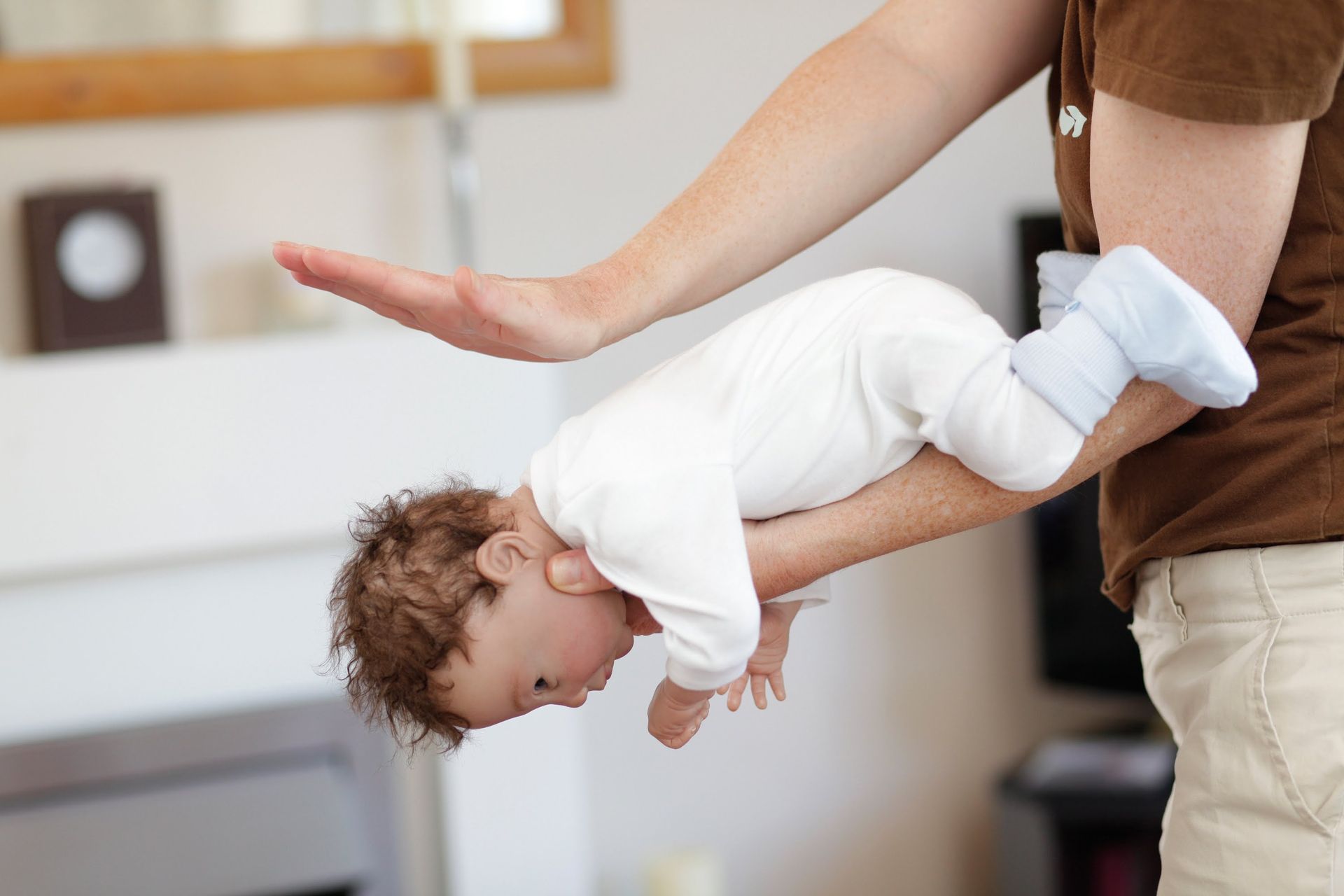
- Give up to 5 back blows:
- Lay your baby face down on your forearm, supporting their head and jaw.
- Use the heel of your hand to deliver firm blows between the shoulder blades.
- If still choking, give up to 5 chest thrusts:
- Turn your baby over, lying them on their back.
- Place two fingers in the centre of their chest (just below the nipple line).
- Push sharply downwards about one-third of the chest depth.
Alternate between 5 back blows and 5 chest thrusts until the object is expelled or your baby becomes unresponsive.
If your baby becomes unresponsive, start CPR immediately and continue until help arrives.
When to Seek Medical Attention
Even if your baby seems fine afterward, always have them checked by a doctor, especially if they swallowed a coin, toy, or button battery. X-rays or other scans may be needed to ensure nothing remains lodged or has caused internal injury.
Prevention Tips
- Regularly inspect toys and baby equipment for loose parts.
- Keep coins, batteries, and small items out of reach.
- Only offer age-appropriate toys that meet Australian safety standards.
Choking can happen in seconds but knowing what to do can make all the difference. Quick, confident action saves lives.
For more information:
https://raisingchildren.net.au/toddlers/safety/choking-strangulation/choking-prevention
Disclaimer: The health information provided is for informational purposes only and is not intended to be a substitute for professional medical advice, diagnosis, or treatment. Always seek the advice of a qualified healthcare provider with any questions you may have regarding a medical condition.