Understanding Common Childhood Rashes: A Parent's Guide
Rashes are a common occurrence in childhood, often causing worry and discomfort for both children and parents. While many are harmless and clear up on their own, some can be a sign of a more serious condition. This guide will walk you through 10 common childhood rashes, providing essential information to help you understand what you're seeing.
1. Roseola Infantum
Cause: This common viral illness is caused by human herpesvirus 6 (HHV-6) or sometimes HHV-7.
What the rash looks like: The rash typically appears as small (2-5mm), pink or rose-coloured spots that may be flat or slightly raised. They blanch (turn white) when pressed.
Body parts it affects: The rash usually starts on the trunk (chest and abdomen) and then spreads to the neck, face and extremities.
Other symptoms: The hallmark of Roseola is a high fever (39.4-40.6°C) that lasts for 3-5 days, which then suddenly drops and the rash appears as the fever subsides. Children usually seem well once the fever breaks.
Contagious or not: Highly contagious, spread through respiratory droplets (coughs, sneezes) from an infected person.
Duration and Treatment: The rash typically lasts for a few hours to a few days. Treatment focuses on managing the fever with paracetamol or ibuprofen. The illness usually resolves on its own.
For more information: https://www.rch.org.au/kidsinfo/fact_sheets/Roseola_infantum
2. Impetigo (School Sores)
Cause: A highly contagious bacterial skin infection, most commonly caused by Staphylococcus aureus (staph) or Streptococcus pyogenes (strep).
What the rash looks like: It often starts as small red sores, usually around the nose and mouth, which then burst and leave crusty, honey-coloured scabs. It can also appear as fluid-filled blisters (bullous impetigo).
Body parts it affects: Most commonly around the nose, mouth, hands and nappy area, but can occur anywhere on the body.
Other symptoms: Itching and sometimes swollen lymph nodes near the infection site.
Contagious or not: Highly contagious, spread through direct contact with sores or contaminated items.
Duration and Treatment: Without treatment, it can last for weeks. It's treated with topical antibiotic ointment or oral antibiotics for more widespread or severe cases. It's important to complete the full course of antibiotics to prevent recurrence and spread.
For more information: https://www.rch.org.au/kidsinfo/fact_sheets/impetigo_school_sores
3. Heat Rash
Cause: Blocked sweat ducts prevent sweat from escaping, trapping it under the skin. Common in hot, humid weather or if a child is overdressed.
What the rash looks like: Appears as tiny red bumps or small clear blisters, sometimes called "prickly heat."
Body parts it affects: Commonly seen in skin folds (neck, armpits, groin), chest, back and areas covered by tight clothing.
Other symptoms: Itchiness or a "prickly" sensation.
Contagious or not: Not contagious.
Duration and Treatment: Usually resolves quickly once the skin cools down and breathing room is allowed. Treatment involves moving to a cooler environment, wearing loose clothing and cool baths. Avoid creams that can further block pores.
For more information: https://raisingchildren.net.au/guides/a-z-health-reference/heat-rash
4. Hives
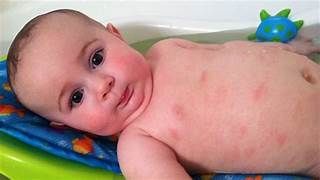
Cause: An allergic reaction to something eaten, touched, inhaled or even from stress, infections or temperature changes. The body releases histamine, causing blood vessels to leak fluid into the skin.
What the rash looks like: Raised, red or pink welts (wheals) that can vary in size and shape, often itchy. They can appear suddenly and disappear just as quickly, only to reappear elsewhere.
Body parts it affects: Can appear anywhere on the body.
Other symptoms: Intense itching. In severe cases, swelling of the lips, face or throat (angioedema) may occur, requiring immediate medical attention.
Contagious or not: Not contagious.
Duration and Treatment: Individual hives last from minutes to hours. Acute hives usually resolve within a few days or weeks. Treatment involves identifying and avoiding the trigger and often antihistamines to relieve itching.
For more information: https://www.rch.org.au/kidsinfo/fact_sheets/hives
5. Molluscum Contagiosum
Cause: A viral skin infection caused by a poxvirus.
What the rash looks like: Small, firm, flesh-coloured or pearly-white bumps with a characteristic dimple or "belly button" in the centre.
Body parts it affects: Can appear anywhere but most common on the trunk, arms, legs and face. Less common on palms and soles.
Other symptoms: Usually asymptomatic but can sometimes be itchy or irritated.
Contagious or not: Contagious, spread through direct skin-to-skin contact, contact with contaminated objects (towels, toys) or self-infection (scratching and spreading).
Duration and Treatment: Can last from a few months to several years if untreated. Often clears on its own. Treatment may include cryotherapy (freezing), curettage (scraping) or topical medications, especially if widespread or bothersome.
For more information: https://raisingchildren.net.au/guides/a-z-health-reference/molluscum
6. Fifth Disease (Slapped Cheek)
Cause: A mild viral illness caused by parvovirus B19.
What the rash looks like: Typically starts with a distinctive bright red, "slapped cheek" appearance on the face. A few days later, a lacy, net-like rash may appear on the arms, legs and trunk, which can become more noticeable with heat or sunlight.
Body parts it affects: First the cheeks, then arms, legs and trunk.
Other symptoms: Before the rash, a child may have mild fever, headache, runny nose or sore throat. Joint pain can occur, especially in older children or adults.
Contagious or not: Contagious during the week before the rash appears (when cold-like symptoms are present). Once the rash appears, the child is generally no longer contagious.
Duration and Treatment: The "slapped cheek" rash lasts a few days and the body rash can come and go for several weeks. Treatment is supportive, focusing on managing symptoms like fever or joint pain.
For more information: https://www.rch.org.au/kidsinfo/fact_sheets/slapped_cheek_fifth_disease
7. Ringworm
Cause: A fungal infection of the skin, not caused by a worm.
What the rash looks like: A red, itchy, scaly rash that typically forms a circular or oval shape with raised edges and a clearer centre, resembling a "ring."
Body parts it affects: Can appear anywhere on the body, including the scalp (tinea capitis), feet (athlete's foot), and groin (jock itch).
Other symptoms: Itching. Scalp ringworm can cause hair loss and scaly patches.
Contagious or not: Highly contagious, spread through direct skin-to-skin contact, contact with infected animals (pets) or contaminated objects (clothing, combs, pool surfaces).
Duration and Treatment: Can persist for weeks or months if untreated. Treated with topical antifungal creams. Oral antifungal medication may be needed for severe cases or scalp ringworm.
For more information: https://www.rch.org.au/kidsinfo/fact_sheets/ringworm
8. Scabies
Cause: A skin infestation caused by the human itch mite, which burrows into the top layer of the skin to lay eggs.
What the rash looks like: Extremely itchy small red bumps, often with tiny, thread-like burrows visible. The rash is typically worse at night.
Body parts it affects: Commonly found in skin folds (between fingers and toes, wrists, elbows, armpits, groin), around the navel, nipples, and buttocks. In infants, it can affect the scalp, face, neck, palms and soles.
Other symptoms: Intense itching, especially at night. Scratching can lead to secondary bacterial infections.
Contagious or not: Highly contagious, spread through prolonged direct skin-to-skin contact with an infected person.
Duration and Treatment: Without treatment, it can last indefinitely. Treated with prescription topical creams (scabicides) that kill the mites. All close contacts usually need treatment simultaneously. Thorough cleaning of clothing and bedding is also essential.
For more information: https://www.rch.org.au/kidsinfo/fact_sheets/Scabies_symptoms_and_treatment
9. Hand, Foot, and Mouth Disease (HFMD)
Cause: A common viral illness, most often caused by coxsackievirus A16 or enterovirus 71.
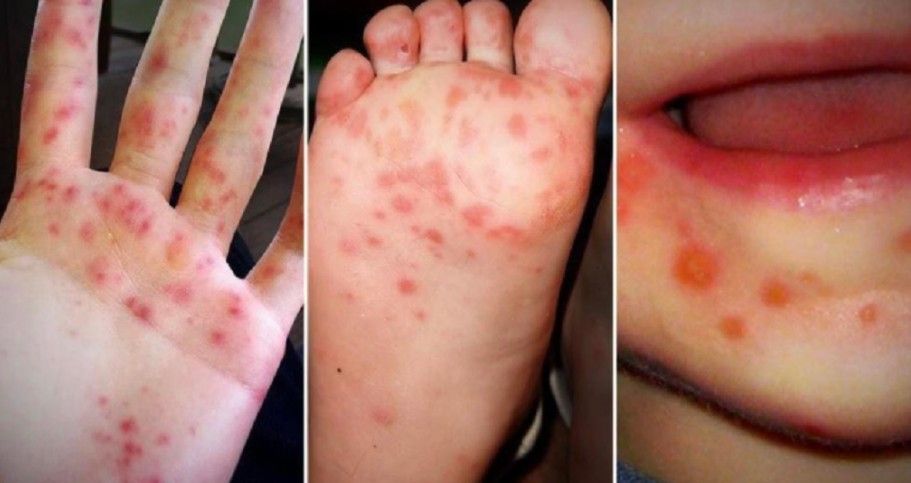
What the rash looks like: A non-itchy rash of red spots, sometimes with blisters, on the palms of the hands and soles of the feet. Painful sores/blisters may also appear in the mouth and on the tongue.
Body parts it affects: Hands, feet and mouth (inside cheeks, gums, tongue). Sometimes on the buttocks.
Other symptoms: Fever, sore throat, loss of appetite and general malaise before the rash appears. The mouth sores can make eating and drinking painful.
Contagious or not: Highly contagious, spread through direct contact with fluid from blisters, saliva, stool or respiratory droplets.
Duration and Treatment: Usually resolves within 7-10 days. Treatment is supportive, focusing on pain relief for mouth sores (e.g., paracetamol or ibuprofen) and ensuring adequate hydration.
For more information: https://www.rch.org.au/kidsinfo/fact_sheets/hand_foot_and_mouth_disease
10. Scarlet Fever
Cause: A bacterial infection caused by Group A Streptococcus bacteria (the same bacteria that cause strep throat). It occurs when strep throat produces toxins that cause a rash.
What the rash looks like: A fine, red rash that feels like sandpaper to the touch. It often starts on the neck and chest and spreads over the body. The skin may peel as the rash fades.
Body parts it affects: Begins on the neck and chest, then spreads to the trunk and extremities. Often spares the area around the mouth (circumoral pallor).
Other symptoms: Sore throat, high fever, headache, nausea, vomiting, swollen neck glands and a "strawberry tongue" (red and bumpy).
Contagious or not: Contagious, spread through respiratory droplets from an infected person.
Duration and Treatment: The rash lasts 2-5 days, but the illness can last longer if untreated. It is treated with antibiotics (typically penicillin or amoxicillin) to prevent complications like rheumatic fever. It's crucial to complete the full course of antibiotics.
For more information: https://www.childrens.health.qld.gov.au/health-a-to-z/scarlet-fever
Disclaimer: The health information provided is for informational purposes only and is not intended to be a substitute for professional medical advice, diagnosis, or treatment. Always seek the advice of a qualified healthcare provider with any questions you may have regarding a medical condition.